When Your SSDI Benefits Are Denied in Grand Rapids, Ohio
Most people never expect a medical condition to interrupt their ability to earn a living. One day, you’re keeping up with work responsibilities, supporting your family, and planning for the future. The next, a serious illness, injury, or chronic condition may leave you struggling to perform even routine job duties.
The loss of income that follows can create immediate financial concerns. Mortgage payments, utility bills, medical expenses, and everyday living costs do not stop simply because a disability prevents you from working. For many residents in Grand Rapids, Ohio, Social Security Disability Insurance (SSDI) benefits become an important source of financial support during this difficult chapter of life.
Unfortunately, obtaining SSDI benefits is not always straightforward. The Social Security Administration applies strict standards when evaluating claims, and many deserving applicants receive denials before eventually securing benefits through the appeals process.
Understanding how SSDI works and what factors affect eligibility can help you prepare for the road ahead.
SSDI Is More Than a Medical Diagnosis
One of the most common misconceptions about Social Security Disability Insurance is that a diagnosis alone guarantees approval.
In reality, the Social Security Administration looks beyond the name of a medical condition. The agency wants to know how that condition affects your ability to perform work-related activities on a consistent basis.
Many applicants are surprised to learn that even severe conditions can result in a denial if the medical evidence does not clearly explain the resulting limitations. Social Security evaluates how a condition impacts a person’s ability to stand, walk, lift, sit, concentrate, communicate, follow instructions, and maintain a regular work schedule.
The focus is not simply on what condition you have. The focus is on whether your condition prevents you from maintaining substantial employment.
The Role of Medical Evidence in an SSDI Claim
Medical documentation is the foundation of a disability claim.
The Social Security Administration reviews records from physicians, specialists, hospitals, therapists, and other healthcare providers. These records help determine the severity of a condition and whether it is expected to prevent you from working for an extended period of time.
Consistent medical treatment can strengthen a claim because it creates a documented history of symptoms, limitations, and ongoing care.
When records clearly demonstrate how a condition affects daily functioning, Social Security has a more complete picture of your situation.
Why Work History Matters for SSDI Eligibility
Unlike Supplemental Security Income (SSI), SSDI is based on your work history.
Workers earn credits by paying Social Security taxes. These credits help establish eligibility for disability benefits if a qualifying medical condition later prevents employment.
Most applicants need a sufficient number of work credits earned during recent years before becoming disabled. The exact requirements vary based on age and employment history.
If you’re a resident of Grand Rapids, Ohio, then you can access this information through your Social Security account or call the Social Security Administration directly to better understand if you meet the basic eligibility requirements.
Understanding Social Security’s Definition of Disability
The Social Security Administration uses a very specific definition of disability.
To qualify, you must demonstrate that your medical condition prevents substantial gainful employment and is expected to last at least twelve months or result in death.
This requirement eliminates many short-term medical conditions from consideration. Even if a temporary injury prevents someone from working for several months, it may not meet the duration requirement established by Social Security.
The agency also evaluates whether or not you could reasonably perform other types of work based on education, skills, work history, and physical or mental limitations.
How Age Can Influence a Disability Decision
Age often becomes an important factor in SSDI evaluations.
As workers grow older, transitioning into entirely different occupations may become more difficult. The Social Security Administration recognizes this reality when evaluating claims.
Education, transferable job skills, and vocational background may all play a role in how Social Security evaluates your ability to perform alternative work.
These factors can significantly impact the outcome of a disability claim, particularly for older applicants whose medical limitations prevent them from continuing their previous occupations.
What Happens When an SSDI Application Is Denied?
Many SSDI applicants in Grand Rapids, Ohio are discouraged when they receive a denial letter from Social Security.
However, a denial does not mean your claim lacks merit. In fact, many successful SSDI cases are approved only after an appeal.
The appeals process provides opportunities to submit evidence, correct errors, and present a stronger case for consideration.
Depending on the circumstances, the process may involve:
- A reconsideration review
- A hearing before an Administrative Law Judge
- Review by the Appeals Council
- Federal court review
In many cases, additional medical records, updated evaluations, or more detailed explanations of functional limitations help strengthen your claim through step 2, Administrative Law Judge hearing.
Because deadlines apply throughout the appeals process, acting quickly after a denial is important.
How an SSDI Attorney in Grand Rapids, Ohio Can Help
It’s important to understand that many SSDI applications are denied during the initial review process. A denial does not mean you do not qualify for benefits. In many cases, valid claims are approved later through the appeals process after additional evidence is submitted or issues with the original application are addressed.
If your claim is denied, then an experienced SSDI lawyer in Grand Rapids, Ohio can help you. We evaluate the reason for the denial, gather additional supporting medical documentation, keep your file on track to meet important deadlines, and build a stronger claim. Having experienced legal guidance can help you avoid common mistakes that could delay your benefits
No Upfront Costs for SSDI Representation
One concern many disability applicants have is whether they can afford legal assistance while unable to work.
Fortunately, we handle cases on a contingency basis. This means your attorney fees are paid only if benefits are successfully obtained.
Additionally, Social Security regulates attorney fees in disability cases. Fees are typically paid from a portion of past-due benefits rather than requiring clients to pay out of pocket while their claim is pending.
This arrangement allows you to pursue experienced legal assistance without adding another financial burden during an already difficult time.
Help for SSDI Applicants in Grand Rapids, Ohio
A disability can affect every area of your life, from your financial stability to your long-term plans for the future. When a medical condition prevents you from earning a living, obtaining SSDI benefits may provide critical support during a challenging transition.
Residents of Grand Rapids, Ohio who have been denied Social Security Disability benefits do not have to navigate the appeals process alone. Arthur Law Firm helps you pursue the benefits you’ve worked hard to earn throughout your career.
If your SSDI application has been denied and your medical condition prevents you from maintaining substantial employment, then contact Arthur Law Firm at 419-782-9881 for a free consultation. We can review your case, explain your options, and help you take the next step toward pursuing the benefits you deserve.
Arthur Law Firm Fair & Square Fee Guarantee
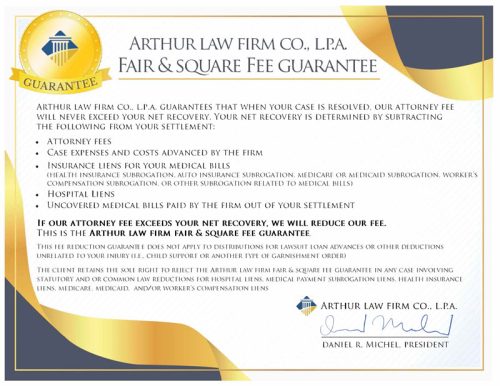
At Arthur Law Firm, we know firsthand that sometimes a settlement can’t cover all the out-of-pocket expenses a person incurs after an accident. Our Fair & Square Fee Guarantee is a commitment to you that our fee will never exceed your net recovery when your case is resolved.
Frequently Asked Questions About SSDI in Grand Rapids, Ohio
Can I apply for SSDI if I am still working part-time?
It is not likely advisable. It may impact your ability to get your disability that you cannot work, even though you are working part-time. Eligibility often depends on whether your earnings exceed Social Security’s substantial gainful activity limit of approximately $1,690. The specific facts of your case can be carefully evaluated in a consultation with an Social Security Disability attorney.
How long does it take to receive an SSDI decision?
The timeline varies significantly. Initial applications may take several months, while appeals can extend the process considerably depending on the stage of review. Most cases take 18-24 months.
What medical conditions qualify for SSDI?
Many physical and mental health conditions qualify if they are severe enough to prevent substantial employment and meet Social Security’s requirements.
Will I automatically receive benefits when my doctor says I am disabled?
No. While medical opinions are important, the Social Security Administration makes its own determination based on medical evidence, vocational factors, and federal disability regulations.
Is it worth appealing an SSDI denial?
Yes. A significant number of successful SSDI claims are initially denied and later approved through the appeals process after additional evidence is provided.