
Are You Unable to Work Due to a Disability in Findlay, Ohio?
For many people in Findlay, Ohio, a steady job is more than just a paycheck. It represents stability, independence, and the ability to provide for a family. When a serious illness or injury interrupts that routine, the impact can be immediate and overwhelming. One day you are managing your responsibilities at work, and the next you are trying to keep up with medical appointments while wondering how you will replace your lost income.
The financial strain often builds quickly. Bills continue to arrive, but your ability to earn a consistent income may no longer be there. During this time, Social Security Disability Insurance (SSDI) can serve as a critical source of support. However, applying for benefits is rarely as simple as submitting a form and waiting for approval.
Understanding how the process works is an important first step for anyone in Findlay who is considering filing for SSDI benefits.
Understanding Work Credits and Eligibility
Social Security Disability Insurance (SSDI) is not a needs-based program. It is tied to your work history and the taxes you have paid into the system over time.
As you work and pay Social Security taxes, you earn what are known as work credits. Most applicants need a certain number of these credits, particularly within the years leading up to their disability, to qualify for benefits.
The exact requirements vary depending on your age and employment background. Someone who has worked consistently for many years will likely have accumulated enough credits, while others may need to review their earnings history and speak with Social Security to find out if they are insured (ie. elligible to apply) for SSDI.
Residents of Findlay can access this information through their Social Security account or call the Social Security Administration directly to better understand whether they meet the basic qualifications.
How Disability Is Evaluated by Social Security
The definition of disability used by the Social Security Administration is very specific. 1st the decide if you can do a prior job you have had in the last five (5) years (“past relevant work”). If yes, then you are not disabled. If not, then Social Security looks at whether you are capable of performing any type of substantial gainful work.
To meet the criteria, your condition must be expected to last at least twelve months or result in death. You must also provide detailed medical evidence that explains how your condition affects your ability to function on a daily basis.
This evidence often includes:
- Physician treatment notes
- Diagnostic imaging and lab results
- Reports from specialists
- Documentation of ongoing care and treatment
The more clearly these records demonstrate your limitations, then the stronger your claim becomes.
How Age and Functional Limitations Affect Your Claim
Disability claims are not evaluated based on medical records alone. The Social Security Administration also considers personal factors such as age, education, and work experience.
For example, someone who has spent decades in a physically demanding job may have difficulty transitioning into a completely different type of work. This can influence how the agency views their ability to remain employed.
In addition, your physical and mental limitations are carefully assessed. These may include:
- Difficulty standing or walking for extended periods.
- Limited ability to lift or carry objects.
- Trouble concentrating or maintaining focus.
- Challenges interacting with coworkers or the public.
These limitations are used to create a profile of what you are still capable of doing in a work setting.
Income Limits and What Counts as Substantial Work
Even with a serious medical condition, earning above a certain monthly amount can affect your eligibility. The Social Security Administration uses a standard called substantial gainful activity to determine whether you are still able to engage in meaningful work.
If your income exceeds this threshold, your claim may be denied regardless of your medical condition. This is where things can become complicated, especially for individuals who attempt to work part-time or take on limited duties while managing their health.
Understanding how these income limits apply to your situation is an important part of preparing your application.
What to Expect During the SSDI Application Process
The process begins with the initial application that includes your medical records, employment history, and supporting documentation. A decision at this stage can take several months.
If your claim is denied, you have the option to request reconsideration. This involves a second review by a different examiner. If your claim is denied again, the next step is a hearing before an Administrative Law Judge.
At this hearing, you will be able to present additional evidence and explain how your condition affects your ability to work. In some cases, claims may continue to higher levels of review, including the Appeals Council or federal court. Each stage can add additional time to the process, making careful preparation especially important.
Why Disability Claims Are Initially Denied
A common misconception is that a diagnosis alone is enough to qualify for disability benefits. In reality, the Social Security Administration applies a strict set of rules when evaluating each claim.
Every application must clearly show not only that you have a medical condition, but also that the condition prevents you from maintaining consistent employment. Missing documentation, incomplete records, or vague descriptions of limitations can all lead to delays or denials.
It is not unusual for applicants to wait months for a response, only to receive a denial letter stating that they are still capable of working in some capacity. This can be frustrating, especially when your daily experience tells a very different story.
Because of this, many people in Findlay find themselves needing to continue the process through additional steps.
The Value of Legal Support During the Process
Working with an attorney after your claim is denied can provide a clearer understanding of what the Social Security Administration is looking for in a successful claim. Legal guidance can help identify gaps in your application and strengthen the evidence supporting your case.
An attorney may assist with:
- Collecting and organizing medical documentation.
- Communicating with healthcare providers.
- Preparing you for a disability hearing.
- Addressing questions from judges or vocational experts.
For many applicants in Findlay, Ohio, having this level of support can make a meaningful difference during the appeals process.
Arthur Law Firm Fair & Square Fee Guarantee
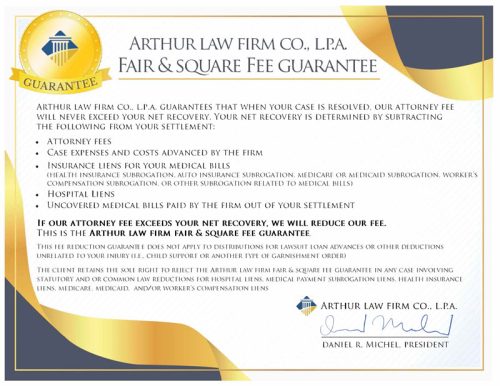
At Arthur Law Firm, we know firsthand that sometimes a settlement can’t cover all the out-of-pocket expenses a person incurs after an accident. Our Fair & Square Fee Guarantee is a commitment to you that our fee will never exceed your net recovery when your case is resolved.
Support for SSDI Applicants in Findlay, Ohio
Navigating the Social Security Disability process can feel overwhelming, particularly when you are managing the physical and emotional effects of a serious medical condition. From gathering medical evidence to understanding eligibility requirements and preparing for appeals, each step requires careful attention.
If you have been denied SSDI benefits, experienced legal guidance may help clarify the next steps and improve the strength of your claim.
Arthur Law Firm can help you navigate the SSDI system after a denial. We assist clients in building stronger cases and pursuing the benefits they need to support themselves and their families. If your condition has made it difficult to earn a consistent living and your claim has been denied, contact us at (419)-782-9881 for a free consultation. Taking the next step may help you move closer to the financial stability you need during this challenging time.