
Experienced SSDI Lawyer for Swanton, Ohio
A serious medical condition can change your ability to work without warning. An illness, injury, or chronic condition may make it impossible to continue performing the job duties you once handled every day. When your ability to earn an income disappears, bills, medical expenses, and other financial obligations do not stop.
For many people in Swanton, Ohio, Social Security Disability Insurance (SSDI) benefits can provide an important source of financial support when a disability prevents them from maintaining employment. Unfortunately, qualifying for SSDI is not always as simple as having a serious medical diagnosis. Social Security applies specific requirements when reviewing disability claims, and many applicants are denied even when their conditions make working extremely difficult.
If your SSDI application has been denied, then an experienced Swanton, Ohio social security disability lawyer can help you file an appeal.
Your Medical Condition Is Only Part of Your SSDI Claim
A diagnosis is important, but Social Security does not approve disability claims based solely on the name or severity of a medical condition.
The Social Security Administration considers how your condition affects your ability to perform work-related activities. This can include your ability to sit, stand, walk, lift, concentrate, communicate, follow directions, and maintain a consistent work schedule.
Two people with the same diagnosis may experience very different limitations. That is why your claim needs to explain not only what condition you have, but how that condition affects your ability to work on a regular and sustained basis.
Medical Evidence Can Help Demonstrate Your Limitations
Medical documentation is a central part of an SSDI claim. The Social Security Administration may review records from physicians, specialists, hospitals, therapists, and other healthcare providers.
These records can establish the history of your condition, symptoms, treatment, and limitations.
Consistent medical care may also provide documentation showing whether your condition has improved, worsened, or continued despite treatment.
Medical records that explain how your condition affects your ability to function can help Social Security understand why you cannot maintain substantial employment. If your claim has been denied, then reviewing your existing medical evidence may also reveal whether additional documentation or clarification is needed.
Work History Matters for SSDI Eligibility
Workers earn Social Security credits by working and paying Social Security taxes. The number of credits needed can depend on your age and when you became disabled.
Your work history is therefore an important part of determining whether you meet the basic requirements for SSDI. You can review your work credits through your Social Security account or contact the Social Security Administration for more information.
Meeting the work history requirement does not automatically qualify you for benefits. You must also meet Social Security’s definition of disability.
How Social Security Defines Disability
Social Security uses a specific standard when determining whether someone is disabled. Your condition generally must prevent you from performing substantial gainful activity and be expected to last at least 12 months or result in death.
The agency also considers whether you could perform other types of work based on your medical limitations, age, skills, and previous work experience.
This means you may be unable to return to your previous occupation but still face questions about whether you could perform another type of substantial work.
What Happens After an SSDI Denial?
Receiving a denial can be discouraging, but an initial denial does not necessarily mean you are not entitled to benefits. The Social Security disability process includes an appeals process that gives applicants opportunities to challenge a decision and submit additional evidence.
Depending on the circumstances, an appeal may involve reconsideration, a hearing before an administrative law judge, review by the appeals council, or federal court review.
Additional medical records, updated evaluations, or clearer documentation of your functional limitations may help address issues with the original claim.
Deadlines apply throughout the appeals process, so it is important to review your denial and understand your next steps as soon as possible.
How an Experienced SSDI Lawyer in Swanton, Ohio Can Help
Trying to navigate Social Security’s requirements while dealing with a disabling medical condition can be overwhelming. You may already be managing medical appointments, treatment, financial pressure, and uncertainty about your future.
At Arthur Law Firm, we can review the reason for your denial, help gather supporting medical documentation, keep track of important deadlines, and build a stronger case for your appeal.
Legal guidance can also help you avoid mistakes that could delay your claim and make sure the evidence supporting your disability is clearly presented.
You Do Not Have to Pay Up Front for Legal Representation
If you are unable to work, then you may be concerned about how you could afford a lawyer to help you. SSDI representation is generally handled on a contingency basis, meaning you do not have to pay attorney fees out of pocket while your disability claim is pending.
Attorney fees are subject to Social Security’s rules and are generally paid from past-due benefits if benefits are successfully obtained. This allows people pursuing disability benefits to seek legal assistance without adding another immediate financial burden.
Get Help With Your SSDI Claim in Swanton, Ohio
A disability can affect your income, your family, and your plans for the future. When a medical condition prevents you from working, SSDI benefits may provide important financial support.
If your application has been denied, then you may have the right to appeal and provide additional evidence supporting your claim. Arthur Law Firm helps SSDI applicants in Swanton, Ohio understand their options and navigate the disability appeals process.
If you have been denied SSDI benefits and your medical condition prevents you from maintaining substantial employment, then contact Arthur Law Firm right away at 419-782-9881.
Arthur Law Firm Fair & Square Fee Guarantee
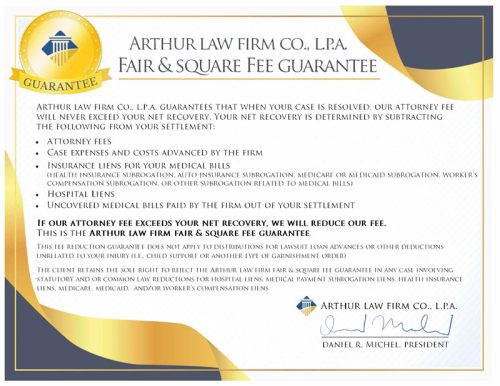
At Arthur Law Firm, we know firsthand that sometimes a settlement can’t cover all the out-of-pocket expenses a person incurs after an accident. Our Fair & Square Fee Guarantee is a commitment to you that our fee will never exceed your net recovery when your case is resolved.
Frequently Asked Questions About SSDI in Swanton, Ohio
Can I receive SSDI if I can still work some?
Working while applying for SSDI can affect your eligibility depending on your earnings and circumstances. Working is not recommended when applying for disability. Social Security considers substantial gainful activity when evaluating disability claims. An attorney can review your situation and help you understand how your current work may affect your claim.
How long does an SSDI claim take?
There is no single timeline for every disability claim. An initial application can take several months, while an appeal may take considerably longer depending on your claim. Many cases can take 18 to 24 months to resolve.
What medical conditions can qualify for SSDI?
Physical and mental health conditions may qualify when they are severe enough to prevent substantial employment and meet Social Security’s requirements. Social Security has a listing of impairments that qualify as disabled online.
Does my doctor’s opinion guarantee SSDI approval?
No. A doctor’s opinion can be important evidence, but the Social Security Administration makes its own determination based on a combination of medical evidence, functional limitations, vocational factors, and applicable disability rules.
Should I appeal if Social Security denies my claim?
An appeal may be worthwhile when you believe your medical condition prevents you from maintaining substantial employment. Many disability claims that are initially denied are later approved through the appeals process. An attorney can review your denial and help you understand whether an appeal may be appropriate.