Who Is Liable When a Driver Hits a Cyclist?
Bicycle accidents can leave injured riders facing serious injuries, medical expenses, property damage, and questions about who is responsible. This is written for cyclists who have been injured after a collision with a motor vehicle and want to understand how liability may be determined. The perspective reflects Arthur Law Firm’s experience helping injured people understand their legal options after accidents. It covers how driver and cyclist actions can affect fault, what evidence may help support a claim, and what steps to consider after a bicycle crash.
You start a bike ride expecting nothing more than a few miles of fresh air and exercise. Then, in an instant, a vehicle turns into your path, opens a door in front of you, or strikes you at an intersection. It all happens so quickly and can leave you dealing with painful injuries, damaged property, medical bills, and uncertainty about what happens next.
If a driver hits you while you are riding a bicycle, determining who is responsible is not always straightforward. You may have questions about whether the driver was at fault, whether your own actions could affect your claim, and what evidence you need to support your side of the story.
Why Bicycle Crashes Can Become Complicated
Motor vehicle and bicycle accidents happen for many reasons. A driver may be distracted by a phone, fail to yield at an intersection, follow too closely, speed, or make a turn without noticing a cyclist. Poor visibility, road conditions, parked vehicles, and confusion about traffic signals can also contribute to a crash.
In some situations, the driver may claim that you were riding improperly or entered the roadway unexpectedly. Those claims can make an already stressful situation harder to navigate. Insurance companies also look closely at how the accident happened before deciding whether to offer compensation.
Your injuries may also make the situation more difficult. A bicycle offers little protection against a vehicle, so a collision can result in broken bones, head injuries, road rash, or other serious harm. You may need ongoing medical care while also missing work and dealing with the cost of repairing or replacing your bicycle.

How Fault Is Determined
Liability in a bicycle accident generally depends on the facts surrounding the collision and the traffic laws that apply. If a driver failed to follow a state or local statute, and that violation contributed to your injuries, you may have grounds to pursue compensation. However, the specific circumstances matter.
Your actions will also be considered. For example, questions can arise about whether you had the right of way, followed traffic signals, used the appropriate portion of the roadway, or took other reasonable precautions. As a bicyclist on the roadway, you also have a duty to adhere to state and local ordinances. Depending on the circumstances and the law, a finding that you share some responsibility can affect the amount of compensation you recover.
That does not necessarily mean you should assume the accident was your fault. You may remember the crash differently from the driver, and witnesses might have seen details that neither of you noticed. A careful review of the evidence will provide a clearer picture of what happened.
Evidence That Can Help Your Case
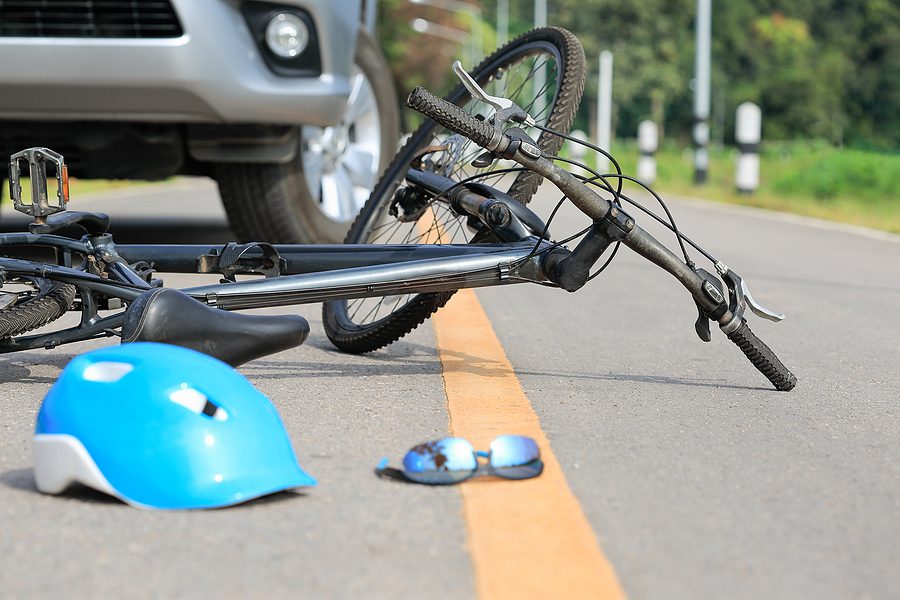
The information available after a bicycle crash plays an important role in helping to determine liability. If you are physically able to do so, you may want to document the scene before anything changes. Photos of your bicycle, the vehicle, road conditions, traffic signs, your injuries, and the surrounding area can help show how the collision occurred.
Other evidence may include:
- Information memorialized in police reports and accident records
- Statements from people who witnessed the crash
- Photos or video from nearby security cameras or dashboard cameras
- Medical records documenting your injuries and treatment
- Records showing missed work or other financial losses
- Insurance information for the driver and any applicable coverage
You may also want to preserve damaged clothing, your bicycle, helmet, and other equipment.
What You Should Do After a Bicycle Accident
Your health should be your first concern after a collision. If you are injured, seek medical attention as soon as reasonably possible. Some injuries may not be obvious immediately, particularly after the shock and adrenaline of an accident.
If you can safely do so, exchange information with the driver and report the crash to law enforcement. Avoid arguing about fault at the scene or making statements that could later be interpreted as accepting responsibility. It’s a good idea to write down what you remember while the details are still fresh.
You should also be cautious about discussing the accident with an insurance company before you understand your legal options. An insurer may ask questions about the crash or your injuries while evaluating a claim. You can and should speak with an experienced bicycle accident attorney before providing a recorded statement or accepting a settlement.
Protecting Your Rights After a Crash
If a driver hits you while you’re riding your bike, you may feel overwhelmed by everything that follows. While you are focused on recovering, medical bills arrive, your bicycle needs repairs, and you’re trying to figure out how you will handle time away from work.
An experienced, local attorney can review your accident, available evidence, insurance coverage, and your losses to help you understand what options may be available. Depending on the circumstances, you may be able to pursue compensation for medical expenses, lost income, property damage, pain and suffering, and other losses.
Every bicycle accident is different, and the outcome of a claim depends on the facts and applicable law. Getting legal guidance early can help you make informed decisions while protecting your rights.
You Don’t Have to Go It Alone
After a bicycle accident, you may have more questions than answers. A driver may be responsible, but determining liability requires a closer look at the evidence, traffic laws, witness accounts, and circumstances surrounding the crash. If you were injured, taking steps to document what happened and understand your legal options may help you protect your interests. Contact Arthur Law Firm right away at (419) 782-9881 for a free consultation to discuss your legal options.